
Consumer Ratings and Reviews

Relates to websites that permit consumers or the public to rate products, services, individuals, and organizations.

FTC Clarifies Obligations of Product Reviewers, But Does Not Ease Concerns

On March 12, 2013, the Federal Trade Commission released a new guidance paper entitled ".com Disclosures: How to Make Effective Disclosures in Digital Advertising." The new FTC guidance updates a prior FTC release from 2000 relating to disclosures in online advertising.

Jurisdiction: 

Subject Area: 

Guadagnini Violin Shop v. TruthTeller1790

Date: 

01/23/2012

Threat Type: 

Lawsuit

Party Receiving Legal Threat: 

Eric Swanson, a.k.a. TruthTeller1790

Type of Party: 

Individual
Organization

Type of Party: 

Individual

Court Type: 

State

Court Name: 

Circuit Court for Cook County, Illinois

Case Number: 

2012-L-000802

Publication Medium: 

Website

Relevant Documents: 

Status: 

Pending

Description: 

On January 23, 2012, the Guadagnini Violin Shop (the "Shop") and owner Chunyee Lu filed suit in Illinois state court against a then-anonymous online reviewer. The complaint alleged that on January 21, 2011, a person using variations on the screen name "TruthTeller1790" posted negative reviews of the Shop on multiple user-review sites, including Yelp and Kudzu. All of the reviews were posted from the same IP address. Plaintiffs attached copies of the contested reviews to the complaint, and alleged that the reviews contained numerous libelous statements, such as allegations that Guadagnini Violin Shop performed unnecessary repairs and sold overpriced and falsely-identified instruments.

The complaint alleged counts of defamation (per se and per quod), false light, and tortious interference, and sought money damages.

On February 7, 2012, plaintiffs filed an amended complaint, identifying Eric Swanson as "TruthTeller1790." According to the amended complaint, plaintiffs traced the IP address linked to the reviews to cable provider RCN Corporation, which identified Swanson as that address's subscriber. The amended complaint alleged that Swanson operated a competing Chicago violin shop.

In addition to the original four counts of defamation, false light, and tortious interference, the amended complaint added counts of violations of Illinois' Consumer Fraud and Deceptive Business Practices Act, its Uniform Deceptive Trade Practices Act, and a common-law trade disparagement claim. The amended complaint also added requests for punitive damages.

Jurisdiction: 

Content Type: 

Subject Area: 

CMLP Notes: 

3/23/2012: JS creating

Ratingz, Inc. v. Adrian Philip Thomas, P.A.

Date: 

02/22/2012

Threat Type: 

Lawsuit

Party Receiving Legal Threat: 

Ratingz, Inc.

Type of Party: 

Organization

Type of Party: 

Organization

Court Type: 

Federal

Court Name: 

U.S. District Court, Northern District of California

Case Number: 

5:12-cv-00868-HRL

Legal Counsel: 

Kurt Opsahl & Matthew Zimmerman, Electronic Frontier Foundation

Publication Medium: 

Website

Relevant Documents: 

Status: 

Concluded

Disposition: 

Settled (total)

Description: 

On February 22, 2012, Ratingz, Inc., operator of LawyerRatingz.com, a user-review site for reviewing attorneys, filed a declaratory judgment action in federal court in California.

According to Ratingz's complaint and the attached exhibits, the background to the declaratory judgment filing is as follows: On December 9, 2011, the managing partner of Florida law firm Adrian Philip Thomas, P.A. emailed Ratingz concerning a number of negative reviews of the firm on LawyerRatingz.com. That email requested the name of Ratingz's agent in Florida, so that Adrian Thomas could serve Ratingz with a complaint over the reviews.

On February 2, 2012, an attorney representing Adrian Thomas sent a cease and desist to Ratingz, stating that Ratingz had until the next day to remove all of Adrian Thomas's ratings from the site. This letter contended that neither CDA § 230 nor California's Anti-SLAPP law protected Ratingz.

On February 10, 2012, Adrian Thomas sent another letter to Ratingz. Along with this letter, the law firm sent a copy of the complaint Adrian Thomas was planning to file against Ratingz in Florida state court. The letter described some business the firm had lost because of poor reviews on LawyerRatingz.com, and also stated that the firm was planning to file a defamation lawsuit against the person who wrote one of the reviews. The closing of the letter stated that litigation was a "business decision," and that it would be more "cost effective" for Ratingz to remove Adrian Thomas from the reviews site than it would be to "stand on principle . . . regardless of whether you believe you will prevail."

The attached Draft Complaint against Ratingz detailed one of the reviews at issue, and described the unsuccessful steps Adrian Thomas had taken to get the review removed. This Draft Complaint would have sought an injunction to remove Adrian Thomas from LawyerReviewz.com during the litigation, and alleged one count of tortious interference with a business relationship.

In response to the threatened Florida litigation, Ratingz filed its declaratory judgment action in California. Its complaint contains four causes of action under the Declaratory Judgment Act, based on CDA § 230, the First Amendment, Florida tortious-interference law, and Florida's statute of limitation.

As of February 28, 2012, the case has been assigned to a magistrate judge. 

Update:

On April 9, 2012, Ratingz filed a notice of voluntary dismissal with prejudice. 

Jurisdiction: 

Content Type: 

Subject Area: 

CMLP Notes: 

3/1/2012: JS created

Ascentive v. Opinion Corp.

Date: 

09/24/2010

Threat Type: 

Lawsuit

Party Receiving Legal Threat: 

Opinion Corp. d/b/a PissedConsumer.com, Michael Podolsky, Joanna Simpson, Alex Syrov

Type of Party: 

Organization

Type of Party: 

Individual
Organization

Court Type: 

Federal

Court Name: 

U.S. District Court, Eastern District of New York

Case Number: 

10-cv-04433

Legal Counsel: 

Goetz Fitzpatrick PLLC

Publication Medium: 

Forum

Relevant Documents: 

Status: 

Pending

Disposition: 

Injunction Denied

Description: 

Ascentive, LLC, a software company, filed suit against Opinion Corp. d/b/a PissedConsumer.com on September 24, 2010, claiming that Opinion Corp., through its PissedConsumer website, infringed on Ascentive trademarks. The complaint alleges seven claims for relief against Opinion Corp.:

  • The first and second claims allege that Opinion Corp. violated the Civil Racketeer Influenced and Corrupt Organizations (RICO) Act, 18 U.S.C. 1961-1968, by conspiring to extort and solicit money from organizations that are the victims of complaints on the PissedConsumer website.
  • The third and fourth claims allege that Opinion Corp. violated the Lanham Act and Ascentive's common law trademark rights, respectively, by using Ascentive trademarks in web addresses such as Ascentive.PissedConsumer.com and FinallyFast.PissedConsumer.com.
  • The fifth through seventh claims allege that Opinion Corp. participated in unfair trade practices through its PissedConsumer website, resulting in interference with contractual relations and unjust enrichment.

In its answer, Opinion Corp. asserted that Ascentive's claims were barred by 47 U.S.C. § 230 (CDA 230). CDA 230 provides that "No provider or user of an interactive computer service shall be treated as the publisher or speaker of any information provided by another information content provider." It also provides that "No cause of action may be brought and no liability may be imposed under any State or local law that is inconsistent with this section." For more information on CDA 230, see the corresponding CMLP Legal Guide entry.

Ascentive filed a Motion for Preliminary Injunction on November 23, 2010, attempting to enjoin PissedConsumer from using Ascentive's trademarks in the site's metadata and as subdomains. In its Memorandum in Support of the Motion for Preliminary Injunction, Ascentive maintained that PissedConsumer holds itself out to be objective, but manipulates postings on its site and uses those to attempt to extort money from the victims of these complaints, in violation of RICO. Regarding the alleged trademark infringement, Ascentive argued that PissedConsumer has used Ascentive's trademarks in the site's metadata, causing PissedConsumer sites to appear prominently in Internet search results. According to Ascentive, this creates "initial interest" confusion in violation of the Lanham Act. Ascentive additionally claimed that its trademarks were used in subdomain names and as prominent text on the PissedConsumer sites, which further leads to consumer confusion resulting in trademark infringement.

In its Opposition Memorandum, Opinion Corp. claimed that Ascentive's request for a preliminary injunction was essentially a request for prior restraint on speech that is protected by the First Amendment and therefore invalid. Opinion Corp. argued that its use of Ascentive trademarks constituted expression protected by the First Amendment. Finally, Opinion Corp. argued that the content posted on its sites should be protected under CDA 230. It contended that "sites such as PissedConsumer.com fall squarely within the protection of the statute, which applies to all state law claims, however styled, so long as the act complained of is the publication of third party content."

After a hearing on Ascentive's Motion, and at the request of the presiding judge, Opinion Corp. submitted a bench brief discussing the application of fair use doctrine under the Lanham Act claim in this case. Opinion Corp. asserted that use of a trademark is protected when it is "fair[] and in good faith only to describe the goods and services of [the complaining] party." In this case, Opinion Corp. argued, PissedConsumer used the Ascentive marks in good faith as a means of cataloging sites, which constituted fair use.

Ascentive filed a reply letter arguing that a free speech defense is unavailable to sites creating confusion through a domain name. It also asserted that PissedConsumer is not protected by CDA 230, which provides no immunity for intellectual property claim or for content created by PissedConsumer, which include the self-created subdomains.

On December 13, 2011, in a rather lengthy opinion, the court rejected Ascentive's motion for preliminary injunction. The court ruled that there was no likelihood of confusion in PissedConsumer's use of Ascentive's trademarks, finding that "no reasonable visitor" to the various PissedConsumer sites would assume they are affiliated with Ascentive (or any other company), because the use of "pissed" in the domain name connotes criticism and negativity. Regarding use of the marks in metadata, the court found this did not create a likelihood of confusion, because PissedConsumer and Ascentive do not compete with each other, and because search engines generally do not use metadata to determine results. Finally, the court held that PissedConsumer is likely to fall within the protections of CDA 230 regarding the plaintiff's state law claims (unfair trade practices and consumer protection).

The court stated that this decision was without prejudice to Ascentive's opportunity to seek a permanent injunction after discovery has been completed.

Jurisdiction: 

Content Type: 

Subject Area: 

Admission Consultants, Inc. v. McGraw Hill Publishing Co.

Date: 

08/22/2007

Threat Type: 

Lawsuit

Party Receiving Legal Threat: 

McGraw Hill Publishing Co.; McGraw Hill News Bureaus

Type of Party: 

Organization

Type of Party: 

Media Company

Court Type: 

State

Court Name: 

New York Supreme Court

Case Number: 

Index No. 111503/07

Legal Counsel: 

No appearance

Publication Medium: 

Forum

Relevant Documents: 

Status: 

Concluded

Disposition: 

Subpoena Enforced

Description: 

Admission Consultants, Inc. petitioned the New York Supreme Court to order McGraw Hill, publishers of the BusinessWeek "B-School" forums, to disclose the registration information of several BusinessWeek forum posters.  The posters allegedly defamed Admission Consultants in their posts.

On October 3, 2007, the New York Supreme Court ordered the disclosure of the posters' identities.  McGraw Hill disclosed the required information.  Two of the forum users had registered using Google's Gmail service, leading Admission Consultants to seek the identities of those users in a separate action.

Jurisdiction: 

Content Type: 

Subject Area: 

Threat Source: 

Public Citizen

CMLP Notes: 

Source: Paul Levy of Public Citizen, via Phil Malone

Priority: 

2-Normal

Giordano v. Romeo

Date: 

09/17/2009

Threat Type: 

Lawsuit

Party Receiving Legal Threat: 

Donna L. Romeo; Xcentric Ventures, LLC

Type of Party: 

Individual
Organization

Type of Party: 

Individual
Organization

Court Type: 

State

Court Name: 

Circuit Court of the 11th Judicial Circuit in and for Miami-Dade County, Florida

Case Number: 

09-68539 CA25

Legal Counsel: 

Maria Crimi Speth, of Jaburg Wilk (For Xcentric); Lawrence A. Wanshel (For Romeo)

Publication Medium: 

Website

Relevant Documents: 

Status: 

Pending

Disposition: 

Dismissed (partial)

Description: 

John Giordano, president of a Florida-based addiction treatment company, filed suit (individually and on behalf of his company) against Donna Romeo over a posting on consumer-reporting website Ripoff Report. The post describes the treatment facility's conditions in harsh terms, and states that "one of the owners is a convicted felon."

The complaint names both Romeo and Ripoff Report's parent company, Xcentric Ventures; it alleges defamation (libel and libel per se) against Romeo, and seeks to permanently enjoin Ripoff Report (through Xcentric) from continuing to publish the post.

According to court transcripts, Giordano and Romeo eventually reached an agreement according to which the court would enter an injunction against Romeo, requiring her to ask Ripoff Report to remove the post. Ripoff Report's policy is to not remove posts. After Ripoff Report refused to remove the post, the trial court issued a temporary injunction against Xcentric. In so doing, the court found that because of the refusal to remove, Xcentric became "the publisher of the statements," thus outside the protections of 47 U.S.C. § 230.

Xcentric appealed, but withdrew that appeal shortly thereafter. A newly-assigned trial judge then dismissed the case against Xcentric, citing a number of cases for the proposition that Section 230 protects Ripoff Report. Giordano's appeal is pending in Florida's Third District Court of Appeals.

UPDATE:

On December 28, 2011, the Third District Court of Appeals ruled in favor of Xcentric. In a brief five-page opinion, the court stated that while Xcentric's business practices were "appalling," and "created a forum for defamation," Section 230 provides complete immunity for internet service providers like Xcentric against actions based on third-party postings. The court's decision is not final until the disposition of any timely motion for rehearing that Giordano might file.

Jurisdiction: 

Content Type: 

Subject Area: 

CMLP Notes: 

1/12/2012: JS updating; text of update sent to JH for review  

---- 

Hopefully this link to the appeals docket will continue to work:

http://199.242.69.70/pls/ds/ds_docket?p_caseyear=2011&p_casenumber=707&psCourt=3&psSearchType=

Here's a link to one of the att'ys handlying the appeal for Xcentric:

http://www.jaburgwilk.com/attorneys/maria-crimi-speth.aspx 

Carleton Hotel LLC v. Gladstone

Date: 

06/15/2011

Threat Type: 

Lawsuit

Party Receiving Legal Threat: 

Michael Gladstone, Liora Braun

Type of Party: 

Organization

Type of Party: 

Individual

Court Type: 

State

Court Name: 

Circuit Court for Cook County, Illinois

Case Number: 

2011-L-006256

Publication Medium: 

Website

Relevant Documents: 

Status: 

Pending

Disposition: 

Lawsuit Filed

Description: 

On June 15, 2011, Carleton Hotel LLC (owner of The Carleton at Oak Park hotel) filed suit against two customers for a negative review posted on travel site TripAdvisor.com. The defendants allegedly posted the review after staying at The Carleton and possibly finding bedbugs.

The complaint alleges that the hotel paid for a proper bedbug inspection after the defendants mentioned the possibility of infestation, and that defendants knew that the inspection revealed no evidence of bedbugs. Carleton is seeking damages stemming from defamation (both per se and per quod), false light invasion of privacy, and tortious interference with prospective economic advantage.

Jurisdiction: 

Content Type: 

Subject Area: 

Rajagopal v. Does

Date: 

10/22/2010

Threat Type: 

Lawsuit

Party Receiving Legal Threat: 

John Does 1-10

Type of Party: 

Individual

Type of Party: 

Individual

Court Type: 

State

Court Name: 

Henrico Circuit Court, Virginia

Case Number: 

CL 10-3014

Legal Counsel: 

Michael H. Page, Paul A. Levy, Public Citizen Litigation Group; Rebecca K. Glenberg, ACLU of Virginia

Publication Medium: 

Website

Relevant Documents: 

Status: 

Pending

Description: 

Usha Rajagopal, a plastic surgeon in San Francisco, sued ten John Does for defamation and various business torts in Virginia state court.  The claims stem from reviews of Rajagopal posted by the defendants on Google.com. Rajagopal also subpoenaed Google to determine the identities of five of the Does.

One of the Does, Cannoli38, moved to quash the subpoena.  He argued that because he and the other Does have a First Amendment right to speak anonymously, Rajagopal must make a five-part showing that satisfies the Dendrite standard to identify the Does.  Cannoli38 argued that Rajagopal did not give the Does noticed as required by Dendrite, nor did she provide any evidence supporting her claims against the Does.

Cannoli38 alleged that the Does' reviews consisted solely of opinion statements, which are protected by the First Amendment, and restatements of an article from SFWeekly, a San Francisco news site, that posted a story about Rajagopal's advertising practices and allegations brought against her by the California Medical Board.  Cannoli38 argued that the balance of the equities weighed against Rajagopal.

Cannoli38 also called upon Rajagopal and her attorney to be sanctioned, as he argued the lawsuit is meritless, has no ties to Virginia, and was meant to be an end run around California's anti-SLAPP law, which would likely prevent Rajagopal from pursuing the case in her home state.

Jurisdiction: 

Content Type: 

Subject Area: 

Davis v. Avvo, Inc.

Date: 

08/26/2010

Threat Type: 

Lawsuit

Party Receiving Legal Threat: 

Avvo, Inc.

Type of Party: 

Individual

Type of Party: 

Organization

Court Type: 

Federal
State

Court Name: 

Circuit Court of the Ninth Judicial Circuit in and for Pinellas County, Florida, Civil Division; U.S. District Court for the Middle District of Florida; U.S. District Court for the Western District of Washington

Case Number: 

10-12785CI11 (Fla. state); 8:10-cv-02352 (Fla. fed.); 2:11-cv-01571 (Wash. fed.)

Legal Counsel: 

Gregg D. Thomas, Susan Tillotson Bunch, Paul R. McAdoo, Thomas & LoCicero PL

Publication Medium: 

Social Network

Relevant Documents: 

Status: 

Pending

Description: 

Florida attorney Larry Joe Davis, Jr. filed a complaint in Florida state court against Avvo, Inc.  Avvo operates a website, www.avvo.com, that serves as a social networking site for attorneys and doctors.  The site also allows members of the public to research attorneys by maintaining profile pages for individual attorneys on which Avvo provides information about the attorney's practice and a numerical rating for the attorney.  The profile pages also allow members of the public to post comments about the attorney.  Avvo does not permit attorneys to withdraw or to shut down their profiles after initially "claiming" the profile.

Davis claims that Avvo (1) defamed him in the information contained in his attorney profile, including allegedly incorrect information regarding the nature of his law practice and his level of public recognition, (2) engaged in the unauthorized commercial use of his likeness by posting a photo of Davis on the profile page, and (3) engaged in unlawful trade practices by placing allegedly false information on Davis's profile page, requiring him to "claim" the page in order to correct the information, and then refusing to allow him to remove the page because it had been claimed.

Updates:

  •  9-14-2010: Davis files an Amended Complaint, deleting his claims for libel and replacing them with claims for false light invasion of privacy and false advertising based upon the alleged misrepresentation of his practice area.
  • 10-19-2010: Avvo removes the case to the U.S. District Court for the Middle District of Florida on the basis of diversity of citizenship.
  • 4-25-2011: Davis files his Third Amended Complaint.
  • 5-23-2011: Avvo moves to strike Davis's Third Amended Complaint.
  • 5-30-2011: Avvo moves to transfer venue to the Western District of Washington, arguing that Davis agreed to the website's Terms of Use which include a choice of venue provision naming the Washington district.
  • 7-7-2011: The court denies as moot Avvo's motion to strike the Third Amended Complaint.
  • 9-13-2011: The court grants Avvo's motion to transfer venue to the Western District of Washington.

Jurisdiction: 

Content Type: 

Subject Area: 

Ninth Circuit Weighs In On Internet Anonymity, Consumer Griping At Risk

The Ninth Circuit Court of Appeals issued a decision last Monday in In re: Anonymous Online Speakers, No. 09-71265 (9th Cir.

Subject Area: 

Fitzgerald v. Maslona

Date: 

06/02/2010

Threat Type: 

Lawsuit

Party Receiving Legal Threat: 

Helen Maslona

Type of Party: 

Individual

Type of Party: 

Individual

Court Type: 

State

Court Name: 

Circuit Court of Cook County

Case Number: 

2010-M1-500855

Legal Counsel: 

Deborah A. Grimm

Publication Medium: 

Website

Status: 

Pending

Description: 

On June 2, 2010, Michael Fitzgerald, owner of Chicago's All Fields of Concrete Construction, filed a defamation lawsuit against Helen Maslona in Illinois state court.  The lawsuit seeks $10,000 in damages and court costs.

According to news reports, the lawsuit is based on a negative review of the company submitted by Maslona to the popular consumer review website Angie's List.  Maslona had contacted All Fields of Concrete Construction to request an estimate for performing work, based on the company's Angie's List profile which indicated that Maslona's neighborhood was one of the ones serviced by the company.  Upon being informed that the company did not accept work in her neighborhood, Maslona allegedly submitted a negative review of the company to Angie's List, giving it an "F."

Court documents indicate that an attorney has appeared in the case on behalf of Maslona, and has filed a motion on her behalf. 

Jurisdiction: 

Content Type: 

Subject Area: 

Threat Source: 

Blog Post

Tiamo Resorts vs. Mark & Cathy Sussman

Date: 

05/28/2010

Threat Type: 

Correspondence

Party Receiving Legal Threat: 

Mark Sussman

Type of Party: 

Organization

Type of Party: 

Individual

Publication Medium: 

Website

Relevant Documents: 

Status: 

Pending

Description: 

My wife and I went to Tiamo Resorts in the Bahamas on a vacation in March 2010. On our last night there, all of the cash in our luggage was stolen, amounting to $7600. We were told by the owners of the resort that his insurance would cover this loss, and he asked us to please be discreet. We were rushed off the resort and taken to the airport in Congo Town for our connecting flight to Nassau. While at the airport, we filed a report with the police. The police also took pictures of the luggage of our neighbors at the resort, who had their suitcase slashed into. Upon check-in at the resort, we had asked if the guest cottages had safes, and we were told that all was secure, and we could leave everything out. In other words, there were no in-room safes.

In the following months, we were discreet, but then we felt it was our responsibility to submit an honest review on TripAdvisor.com. (We also uncovered "visitor" reviews of the resort written by the resort's owner and reported this to the website.) We recently received a threatening letter from the law firm representing this resort. In this letter, the owners of the resort essentially call us liars and begin to twist the account of what happened. Included in this submission is a copy of that letter, and an ensuing letter where the resort asks us to remove ALL reviews. I've also included an email where the owner of the resort thanks us for being so cooperative and not making a scene the morning of our departure after we reported the theft.

There is a link to an article from the Nassau Guardian reporting on a separate theft at the resort that happened in April. The resort is attempting to bully us into removing our review from ALL travel sites, and we never agreed to do so. In fact, in the initial letter from their law firm, Tiamo states that they have no problem with people expressing their opinions, positive or otherwise. It seems that is not the case. They want to remove any negative reviews from the travel websites.

Jurisdiction: 

Content Type: 

Subject Area: 

Threat Source: 

User Submission Form

Subject Area: 

T&J Towing v. Kurtz

Date: 

04/05/2010

Threat Type: 

Lawsuit

Party Receiving Legal Threat: 

Justin Kurtz

Type of Party: 

Individual
Organization

Type of Party: 

Individual

Court Type: 

State

Court Name: 

9th Circuit Court for the County of Kalamazoo

Case Number: 

2010-0206-NZ

Legal Counsel: 

Christopher B. Vreeland - Law Office of Christopher B. Vreeland; Dani K. Liblang - Liblang & Associates, P.C.

Publication Medium: 

Social Network

Relevant Documents: 

Status: 

Pending

Description: 

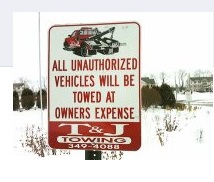
On April 5, 2010, T&J Towing of Kalamazoo, Michigan, filed a defamation lawsuit  against Justin Kurtz, a 21-year-old student at Western Michigan University. The dispute revolves around Kurtz's creation of a Facebook page called “Kalamazoo Residents against T&J Towing.” T&J seeks $750,000 in damages and a court order that Kurtz “immediately cease and desist any further libelous and slanderous written claims” about the company.

According to press reports, Kurtz created the page days after T&J towed his car from the parking lot of his apartment complex. On the page, Kurtz claims that T&J removed his parking permit and improperly towed his car.  As of the time of writing, the Facebook group had over 13,800 members, many of whom have posted comments about their own negative experiences with the company.

The complaint alleges that Kurtz "has falsely and publicly claimed that Plaintiffs have towed vehicles where no violation has occurred and which claims are untrue." Cmpt. ¶ 4.  It also suggests that Kurtz is responsible for the postings of other Facebook users, alleging that Kurtz "has absolutely no way of knowing whether or not all of the written submissions to his website have any truth or validity." Id.¶ 7.

Kurtz filed an answer on April 30, 2010 and asserted counterclaims for violations of the Michigan Consumer Protection Act and abuse of process.

Jurisdiction: 

Content Type: 

Subject Area: 

Threat Source: 

Court Filings

CMLP Notes: 

6/4 2:30pm: Here is a first try. I had trouble with the paragraph breaks in the description section. I tried rich text and html. MH

Yaldo v. Doe

Date: 

12/10/2009

Threat Type: 

Lawsuit

Party Receiving Legal Threat: 

John Doe

Type of Party: 

Individual

Type of Party: 

Individual

Court Type: 

Federal

Court Name: 

United States District Court, Eastern District Michigan

Case Number: 

2:10-cv-11886-JCO-MJH

Relevant Documents: 

Status: 

Pending

Description: 

On May 10, 2010, Dr. Mazin K. Yaldo filed a lawsuit in federal district court against an unnamed Doe defendant, asserting claims for false light ant federal and state trademark infringement and unfair competition.  The claims were based on a Google AdWords campaign that used Plaintiff's trademark YALDO EYE CENTER to trigger an ad with the headline "Yaldo Eye Center Bankrupt" and the text "What you should know before considering yaldo" next to the URL "www.crainsdetroit.com" (a website that reports on local businesses in the Detroit area).  The link redirects to an article on the Crain's Detroit Business website titled "Eye surgery centers declare bankruptcy," which reported that "[f]ive companies headed by ophthalmologist and eye surgeon Dr. Mazin Yaldo have filed for Chapter 11 bankruptcy protection." 

According to the Complaint, Defendant purchased the keywords "Yaldo Eye Center," "Dr. Mazin Yaldo," "Dr. Yaldo," and "Mazin Yaldo" through the Google AdWords program.  The Complaint alleges that "Defendant's advertising is deliberately designed to cause consumers to believe that the advertisement was sponsored by Crain's Detroit Business and that the apparent warning is coming from a credible news source rather than Defendant," and that Defendant's acts were done "with the intent of urging consumers to reconsider their choice of vision correction services."  (Complaint ¶¶ 22-23)  Plaintiff further asserts that the advertisements are misleading, because they "deceiv[e] consumers. . . into believing that Crain's Detroit Business is offering a warning about the quality of services offered by Dr. Mazin Yaldo and or the Yaldo Eye Center." (Complaint ¶ 40)

According to the Complaint, Plaintiff complained to Google about the use of the YALDO EYE CENTER mark in the Google AdWords result, and Defendant subsequently modified the language of the advertisement to read "Yaldo LASIK Bankrupt," and "What You Should Know Before Considering Yaldo LASIK." (Complaint ¶¶ 29-31) 

Jurisdiction: 

Content Type: 

Subject Area: 

Warranty Automotive Services v. Does

Date: 

04/06/2010

Threat Type: 

Lawsuit

Party Receiving Legal Threat: 

John Does 1-5 and ABC Corporations 1-5

Type of Party: 

Organization

Type of Party: 

Individual
Organization

Court Type: 

Federal

Court Name: 

United States District Court for the Northern District of Georgia

Case Number: 

1:10-CV-1006-JEC

Publication Medium: 

Website

Relevant Documents: 

Status: 

Pending

Description: 

On April 6, 2010, Warranty Automotive Services Corp. filed a complaint in federal district court against unnamed Does for claims arising out of defendants' operation of a website at www.lifetimewarrantymyths.com. The Complaint indicates that plaintiff believes the defendants may be residents of Connecticut who own or are otherwise affiliated with a car dealership that is a former customer of Warranty Automotive Services, Premier Subaru, LLC of Branford, Connecticut. (Complaint ¶¶ 20-24.)

According to the Complaint, Warranty Automotive Services Corp. sells lifetime warranty services to automotive dealerships, which extend the manufacturer's limited powertrain warranty for new vehicles for as long as the original purchaser of the vehicle owns it. Plaintiff alleges that in January 2010, defendants began publishing a website at www.lifetimewarrantymyths.com that contains a number of false and defamatory statements about plaintiff's services, including allegations that plaintiff "has been guilty of causing 'consumer confusion,' . . . that plaintiff's lifetime warranty is and will be worthless. . . . that plaintiff has been 'fined' by the Federal Trade Commission, and that the warranty which plaintiff markets and sells is a 'marketing tool to compensate for inherent deficiencies in either [plaintiff's] product, their process or both.'" (Complaint ¶ 14.)  The Complaint further alleges that defendants, throught their website, make claims that plaintiff operates a fraudulent "pyramid scheme." (Complaint ¶ 15.)

The Complaint asserts causes of action for (i) defamation; (ii) tortious interference with prospective economic advantage; (iii) trade libel; (iv) unfair business practices in violation fo O.C.G.A. § 10-1-370 et seq.; and (v) violation of the Cyber Piracy Prevention Act, 15 U.S.C. § 1125(d) (based on defendants' "labeling and positioning their website, 'www.lifetimewarrantymyths.com,' and by using metatags, and otherwise" in a manner alleged to have infringed plaintiff's rights in its WASCOR trademark).

Jurisdiction: 

Content Type: 

Subject Area: 

Threat Source: 

Westlaw Alert

Levitt v. Yelp! Inc.

Date: 

03/12/2010

Threat Type: 

Lawsuit

Party Receiving Legal Threat: 

Yelp! Inc.; Does 1-100

Type of Party: 

Individual

Type of Party: 

Organization

Court Type: 

State

Court Name: 

Superior Court of the State of California, County of San Francisco

Case Number: 

CGC-10-497777

Legal Counsel: 

Michael G Rhodes - Cooley Godward Kronish LLP

Publication Medium: 

Forum

Relevant Documents: 

Status: 

Pending

Description: 

Boris Levitt, owner of Renaissance Furniture Restoration in San Francisco, brought a class action lawsuit against Yelp! Inc. in California state court, alleging violations of California unfair competition law and negligent and intentional misrepresentation. The lawsuit came weeks after other small business owners filed similar lawsuits against Yelp in federal court in California. 

Like the other class action complaints, Levitt's complaint alleges that Yelp runs an extortion scheme, in which Yelp! supposedly promises to positively manipulate user reviews in exchange for the purchase of advertising, and implicitly threatens to detrimentally manipulate reviews if business owners refuse. Specifically, Levitt claims that a number of positive reviews about his business disappeared days after he declined a request to purchase advertising on Yelp. The complaint also alleges that Yelp misrepresents that its reviews are unbiased, causing injury to Levitt's business.

On March 30, 2010, Yelp removed the case to federal court, where it presumably will be consolidated with the other class action lawsuits.

Yelp CEO Jeremy Stoppleman has repeatedly denied moving reviews around to reward advertisers and punish non-advertisers.

Jurisdiction: 

Content Type: 

Subject Area: 

LaPausky v. Yelp! Inc.

Date: 

03/03/2010

Threat Type: 

Lawsuit

Party Receiving Legal Threat: 

Yelp! Inc.

Type of Party: 

Individual

Type of Party: 

Organization

Court Type: 

Federal

Court Name: 

United States District Court for the Central District of California

Case Number: 

2:10-cv-01578

Legal Counsel: 

Sarah Ruth Boot, Matthew Dean Brown, Benjamin H Kleine, Michael G Rhodes - Cooley Godward Kronish LLP

Publication Medium: 

Forum

Relevant Documents: 

Status: 

Pending

Description: 

Christine LaPausky, owner of the D'ames Day Spa in San Diego, brought a class action lawsuit against Yelp! Inc. in California federal court, alleging violations of California unfair competition law. The lawsuit came days after another small business owner filed a similar class action complaint against Yelp. 

The complaint is substantially similar to the first class action complaint and alleges an extortion scheme, in which Yelp! supposedly promises to positively manipulate user reviews in exchange for the purchase of advertising, and implicitly threatens to detrimentally manipulate reviews if business owners refuse.  Like the first complaint, this one relies heavily on press accounts detailing complaints from other businesses about the alleged extortionate behavior. 

Yelp CEO Jeremy Stoppleman responded with a blog post calling the allegations "false and easily refuted." He added:

These copy cat suits get filed in what is known as a "race to the courthouse," where lawyers jockey to be named the lead lawyer of the case and take the biggest share of legal fees; being among the first to file a suit increases the chance of being put in charge of the case.

So, as I said: it's not a surprise to see another such frivolous suit. In fact, it's kind of expected.

This doesn't change a thing however: this suit, like the other, is without merit, we will fight it aggressively and we believe we will win.

This case presumably will be consolidated with the other class action lawsuit pending in the same district court.

Jurisdiction: 

Content Type: 

Subject Area: 

Dunne v. Lara

Date: 

05/22/2008

Threat Type: 

Lawsuit

Party Receiving Legal Threat: 

Charles Lara

Type of Party: 

Individual

Type of Party: 

Individual

Court Type: 

State

Court Name: 

Superior Court of the State of California, Santa Barbara County; Court of Appeal of the State of California, Second Appellate District, Division Six

Case Number: 

1267944 (trial level); B 210779 (appellate level)

Legal Counsel: 

Patric Weddle - Law office of Patric H.R. Weddle

Publication Medium: 

Forum

Relevant Documents: 

Status: 

Pending

Description: 

In 2008, Dunne, the owner of a motorcycle repair shop in Santa Barbara sued Lara, a former customer, who published statements about the shop on DucatiSpot, a forum for Ducati motorcyle enthusiasts.  According to court documents, Lara allegedly posted comments falsely suggesting that the repair shop had been operating without required registrations and that it had been raided by the FBI.

Lara moved to strike the complaint under California's anti-SLAPP statute (Cal. Code Civ. Proc. § 425.16).  The trial court denied the motion and Lara appealed.  On appeal, in November 2009, the California Court of Appeal, Second District, held that Lara's statements were not entitled to the protection of the anti-SLAPP statute because they were not connected to an issue of public interest.  The court reasoned that Lara's comments "expressed only personal dissatisfaction about a single service provider and were not connected to an ongoing discussion on an issue of broader public interest."  Dunne v. Lara, 2009 WL 3808345 (Cal. Ct. App. Nov. 16, 2009).

Jurisdiction: 

Content Type: 

Subject Area: 

Priority: 

1-High

Cats and Dogs Animal Hospital, Inc. v. Yelp! Inc.

Date: 

02/23/2010

Threat Type: 

Lawsuit

Party Receiving Legal Threat: 

Yelp! Inc.

Type of Party: 

Organization

Type of Party: 

Organization

Court Type: 

Federal

Court Name: 

United States District Court for the Central District of California

Case Number: 

2:10-cv-01340

Legal Counsel: 

Matthew Dean Brown, Benjamin H Kleine, Michael G Rhodes - Cooley Godward Kronish LLP

Publication Medium: 

Forum

Relevant Documents: 

Status: 

Pending

Description: 

Cats and Dogs Animal Hospital, Inc., a veterinary practice in Long Beach, California, brought a class action lawsuit against Yelp! Inc. in California federal court, alleging violations of California unfair competition law.

The complaint, filed on February 23, 2010, claims that Yelp! promises to manipulate user reviews in exchange for the purchase of advertising on the popular and influential consumer-review site.  In particular, the complaint alleges that Yelp! advertising employees systematically call business owners that are the subject of negative reviews and promise to remove or relocate negative reviews in exchange for monthly advertising deals.  It further alleges that members of the class were "threatened, implicitly or expressly, that if they did not purchase advertising from Yelp, their Yelp.com pages would be detrimentally manipulated, including for example, by removing positive reviews and posting new, negative reviews." The complaint relies heavily on press accounts detailing complaints from other businesses about the alleged extortionate behavior. 

Yelp CEO Jeremy Stoppleman responded with a two-part blog post (part 1, part 2) vigorously disputing the allegations, saying that the plaintiff's claims are "false" and "ignore empirical evidence in favor of conspiracy theories."  In part 2 of the blog post, Stoppelman stated that "we have never and will never extort businesses; the accusation is beyond ludicrous," and offered an explanation of why some business owners might get the wrong impression:

Why might some business owners think Yelp is shady? Here's the anatomy of a typical Yelp conspiracy theory:
Step 1. Business owner gets a sales call from Yelp that explains an advertising product which seems nuanced; hears stuff like "Favorite review at top" and "Enhance your presence". Business owner eventually decides, "Thanks, but no thanks on the ads, Yelp."

Step 2. Business owner newly-exposed to Yelp decides it’s interesting and aggressively solicits all their family and friends to write reviews.

Step 3. We've already cautioned against this practice and this is why: a few days later, our automated filter suppresses the suspicious-looking reviews.

Step 4. Business assumes algorithmic process in Step 3 is actually a Yelp employee manually punishing the business for declining to advertise in Step 1.

Optional Step 5. Now-angry business finds the Orly Taitz of internet lawyers who may or may not have read about our recent funding round.
Yelp was served with process on March 2, 2010. 


Jurisdiction: 

Content Type: 

Subject Area: 

Pages