

Blogs
 There has always been an active debate about whether the First
Amendment affords government outsiders (like the media) any protection
when they disseminate classified national security information without
authorization.
There has always been an active debate about whether the First
Amendment affords government outsiders (like the media) any protection
when they disseminate classified national security information without
authorization.Falsity and the First Amendment: The U.S. Supreme Court Rules on the Stolen Valor Act
 In the fourteen years that I practiced as a media defense lawyer before joining the Berkman Center, there was one sentence from one Supreme Court opinion that I learned to loathe above all others. It appears in
 From Accident Photos to the White House: Contesting Photo Use in Newspaper Merchandise Sales
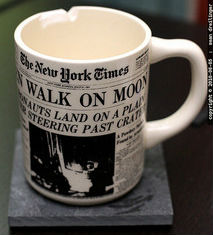 Take a moment to explore your daily newspaper's webpage. You'll likely find recent articles and archives, video materials, job postings, classifieds, sidebars with advertisements, various forms of social media integration, and, most surprisingly (or perhaps not, considering the financial challenges journalism faces), a store.
DMLP Amicus Update: Narrow Victory in Massachusetts Anti-Counterfeiting Case
 The DMLP recently appeared as an amicus curiae in Commonwealth v. Busa, a case brought in Boston Municipal Court under Massachusetts's anti-counterfeiting law,
 ANNOUNCEMENT: Staff Attorney Andy Sellars named the Berkman Center's Corydon B. Dunham First Amendment Fellow
Much Ado About a DMCA Takedown Notice
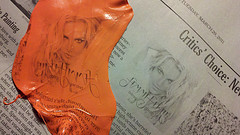 Here is a story that would be an excellent fact pattern for a media law exam. Copyright! DMCA! Libel! Oh my…. Well, at least I hope it will be a topic of interest for the readers of this blog.
Introducing Guest Blogger Marie-Andrée Weiss
 I am excited to welcome Marie-Andrée Weiss as a guest blogger!
(Don't) Blame the Messenger: What to Do about National Security Leaks
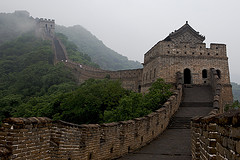 Censorship in China is nothing new. Heck, it's practically to be expected these days.
 Let's start with the following premise: thedirty.com is a tasteless
website. In addition to a bit of celebrity gossip and paparazzi-type
pictures, the site also invites anyone to post pictures – often
revealing, embarrassing, or insulting – of others for comment by users
and, sometimes, the site's proprietor.
Let's start with the following premise: thedirty.com is a tasteless
website. In addition to a bit of celebrity gossip and paparazzi-type
pictures, the site also invites anyone to post pictures – often
revealing, embarrassing, or insulting – of others for comment by users
and, sometimes, the site's proprietor.
 As we have
  Last week the Digital (nee Citizen) Media Law Project joined
 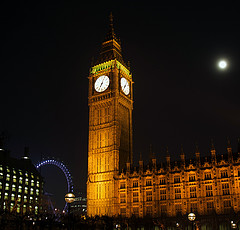 Britain's effort to reform its defamation laws and shed London's title of "libel capital of the world" has been chugging along for several years, but now it looks like it's in sight of the last stop: The government unveiled its proposed
 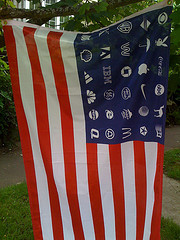 Earlier this week the CMLP (under its new name, the Digital Media Law Project) sought leave to file
  In May 2010, Christopher Sharp used his cell phone to record video of his friend being arrested by the Baltimore Police at the Preakness Stakes. The police demanded that Sharp surrender his phone, stating that the contents might be evidence; when the phone was returned, Sharp discovered that the video he had made, plus a number of other unrelated videos, had been deleted.
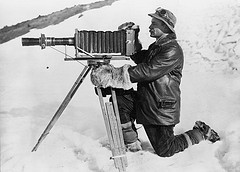 Despite the welcome 7th Circuit decision
in
Despite the welcome 7th Circuit decision
in 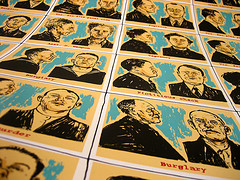 When
When  On April 24, 2012, a Texas jury
 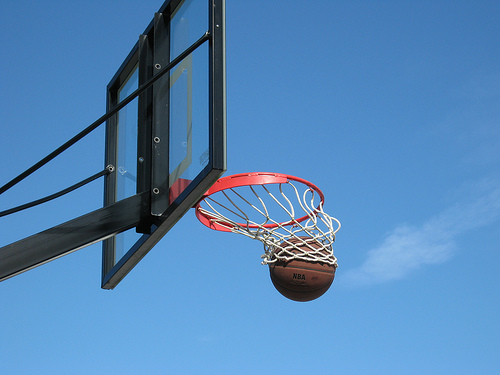 Once again, the CMLP is pleased to report that the First Amendment has scored an important victory in a case involving the recording of police officers in public. Last summer saw the
 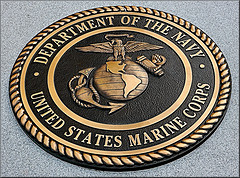 What happens when the First Amendment collides with military decorum and respect for chain of command?