Copyright 2007-26 Digital Media Law Project and respective authors. Except where otherwise noted,
content on this site is licensed under a Creative Commons Attribution-Noncommercial-ShareAlike 3.0 License:
Details.
Use of this site is pursuant to our
Terms of Use and
Privacy Notice.


 It gives me great pleasure to welcome our newest blogger, Jillian Stonecipher! Jillian, a 2L at Harvard Law School, is no stranger to our project, having worked with us as an intern throughout the 2012-13 academic year. When not hanging around the Berkman Center, Jillian works on both the Harvard Journal of Law & Gender and the Harvard Journal of Law & Technology.
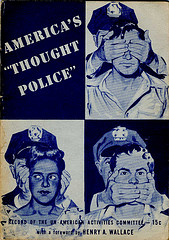 For me, thinking about one of the Obama administration's latest initiatives to keep us all safe online is like one of those pattern recognition puzzles (you know, like "What is the next term in this sequence: O, T, T, F, F, S, S, E, N, __?"). Here, the sequence is:
 Arizona State Representative Michelle Ugenti (R-Scottsdale) introduced
 On December 21, 2012, Dr. Guy Hingston, a cancer surgeon from Port Macquarie in New South Wales, Australia, filed suit against Google in the U.S. District Court for the Central District of California. Dr.
 A Tulsa, Oklahoma girl and her mother
  Last October
  Before the holidays,
  Tomorrow, Harvard University will shut down for its annual Winter Recess, marking the end of the calendar
year for those of us at the Digital Media Law Project.
Tomorrow, Harvard University will shut down for its annual Winter Recess, marking the end of the calendar
year for those of us at the Digital Media Law Project.
 The Digital Media Law Project would like to congratulate The Lens, the New Orleans area's first nonprofit, nonpartisan public-interest newsroom, on obtaining a
  For a while now, one of the main causes of concern for privacy advocates has been "Big Data," that is, the collection, aggregation and analysis of data, on a, well, BIG scale. This post takes the opportunity to review some specific issues and recent developments in this area.

 One overarching theme of the 2012 election season was a struggle with truth. Both campaigns were accused of serial falsehoods, and continuing to spread incorrect information after the truth was reported.
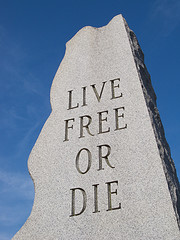 Fighting for the First Amendment can often mean confronting and defending vile, caustic, hurtful, and downright disgusting speech. But not all free speech cases address the words of the most hateful or offensive amongst us. Every once in a while you get a case concerning speech at its most fun and playful.
 Last Thursday,